
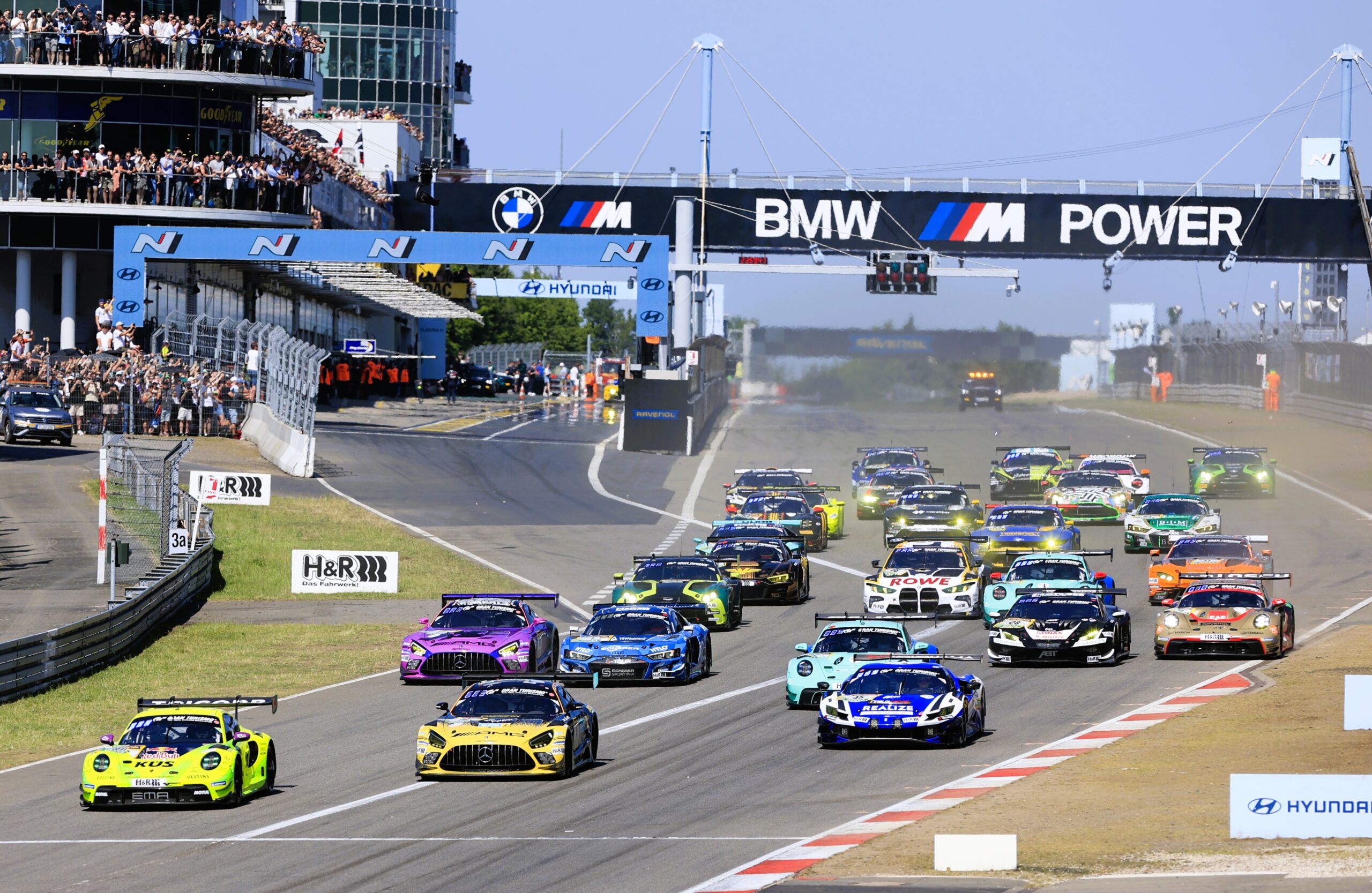
The ADAC RAVENOL 24h Nürburgring is constantly evolving. Since the inaugural event in 1970, the organizers of the ADAC Nordrhein have regularly adapted the regulations to take account of technical advances as well as to optimize processes and further increase safety.
The 54th edition of the race remains extremely popular: more than three weeks before the entry deadline on April 22, everything indicates that the maximum possible 150 starting places will be fully allocated. The official invitation to tender for the event continues to form the basis for all regulations.
New format for top qualifying
The most noticeable change concerns top qualifying. In future, this will be divided into three sections: Top Q1, Top Q2 and Top Q3. The aim of the change is to make the process easier to understand and more transparent for spectators.
As before, only the top classes of the field are eligible to participate, including SP9 (FIA-GT3), SP11 (GT2), AT1 and SP-Pro. Vehicles in the SP-X class can also be admitted, provided they meet certain requirements, such as a minimum power output of 450 hp and the corresponding approval from the race organizers.
Pre-qualification remains possible
There is still the opportunity to qualify early for the decisive Top Q3. A total of up to six vehicles can secure a place in the run-up.
The results of the first three rounds of the Nürburgring Endurance Series (NLS) and the ADAC 24h Nürburgring Qualifier serve as the basis. Among other things, the fastest qualifying and race performances are taken into account, including theoretical best times based on added sector times.
Procedure on the race weekend
The decisive phase begins on Friday of the race weekend:
- Top Q1: All eligible vehicles (without already seeded participants) compete
- Top Q2: The 20 fastest cars from Q1 battle it out for the remaining places
- Top Q3: A maximum of twelve cars determine pole position in individual time trials
The first two sessions last 35 minutes each.
Improved visibility thanks to light panels
Another focus is on safety. Light panels, which were previously mainly used in the dark, will also be used increasingly during the day in future.
Especially in difficult weather conditions in the Eifel – such as rain or fog – these systems are intended to improve the visibility of route signals. It is important to note that the classic flag signal is still decisive; the light panels only serve as additional visual support.
The plan is to deploy a total of 36 systems – 28 along the Nordschleife and eight on the Grand Prix circuit.
Field of participants: maximum capacity utilization expected
With up to 150 vehicles, the 24h Nürburgring is traditionally one of the largest motorsport events in the world. For 2026, it is already clear at an early stage that this limit will be fully utilized.
After the entry deadline, the participants will be selected. Criteria include the balance of vehicle classes as well as the technical and sporting quality of the teams. The aim remains a diverse field of entrants – from near-series vehicles to high-performance GT3 racing cars.
If confirmed teams withdraw their participation, a succession procedure will apply in which any starting places that have become available will be reallocated.